The Forest · 1.7 hectares

Replacing fire risk
with deep roots.

The Aleppo pine on this hillside is the wrong tree in the wrong place — fire-prone, shallow-rooted, foreign to limestone. We are replacing it with Quercus ilex, the native holm oak of the western Mediterranean. A long transition that changes everything about this hillside.

1.7 ha
In transition
2026
First plantings
~2028
EU carbon market opens
1–5 t
CO₂/ha/yr sequestration
How the pines got here

A 1950s decision we are still living with.

In the 1950s, Francisco Franco's regime launched the Patrimonio Forestal del Estado — one of the largest reforestation programmes in European history. The goal was legitimate: decades of deforestation had left Spanish hillsides bare and eroding. Over three billion trees were planted across the country.

On this hillside, the programme chose Aleppo pine. It grows fast in thin soils, which made it effective at stopping erosion quickly. What it could not do was belong here. This limestone slope is holm oak territory — a species with deep roots, low fire risk, and a relationship with the soil that Aleppo pine never built. The pine displaced what was already beginning to grow back naturally.

Seventy years later, the trees are mature, resinous, and highly flammable — sitting directly above orange groves that took decades to establish. The holm oak has been pushing back slowly in the gaps where the pine canopy opens. We are accelerating that process: clearing pine section by section, planting Quercus ilex, and letting the hillside return to what it was always trying to become.

The switch

Pine vs Oak — why it matters.

Going out
Aleppo Pine
Pinus halepensis
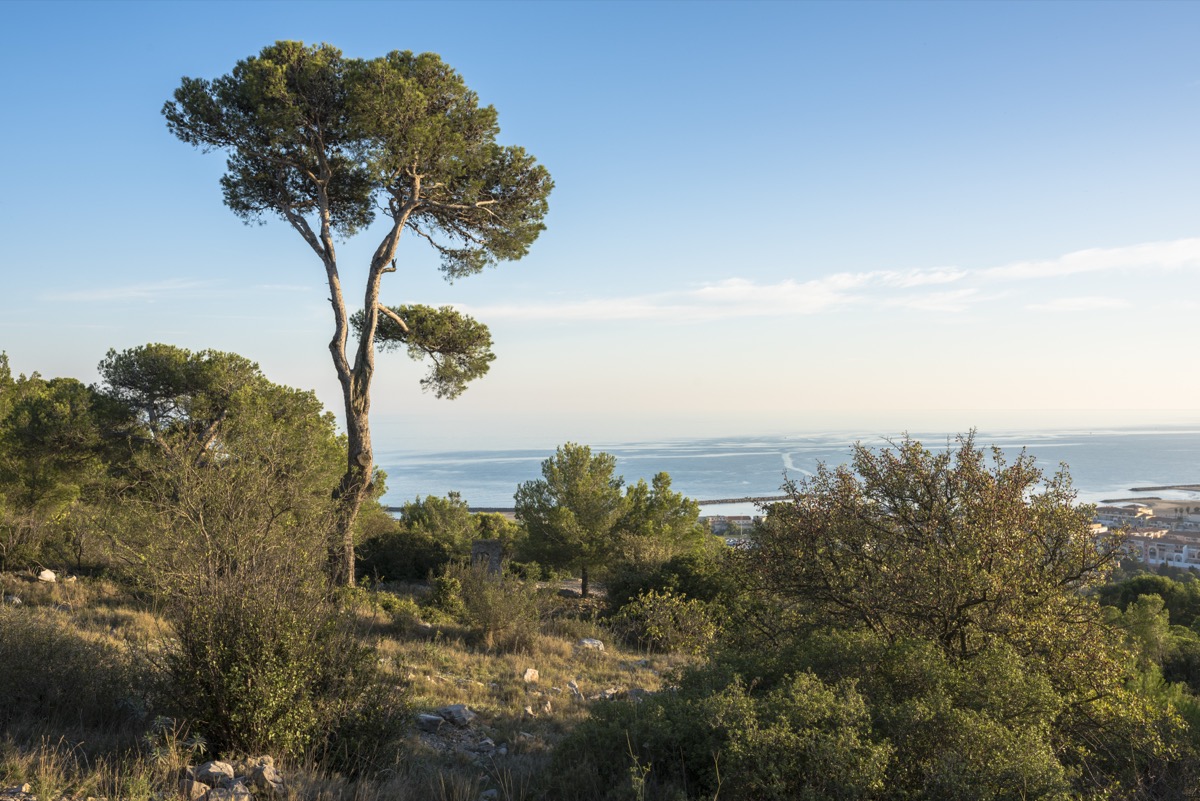
Aleppo pine — Pinus halepensis, Mediterranean coast

Aleppo pine moved in after the original holm oak was cleared. It grows fast and burns easily — resin-soaked wood, shallow roots, no soil benefit. A placeholder, not a permanent species. Above orange groves, it is a fire risk we cannot afford.

🔥 Fire risk Very high
🌱 Native to limestone No
🌿 Root depth Shallow
💨 Carbon storage Low
🍄 Soil biodiversity Poor
VS
Coming in
Holm Oak
Quercus ilex
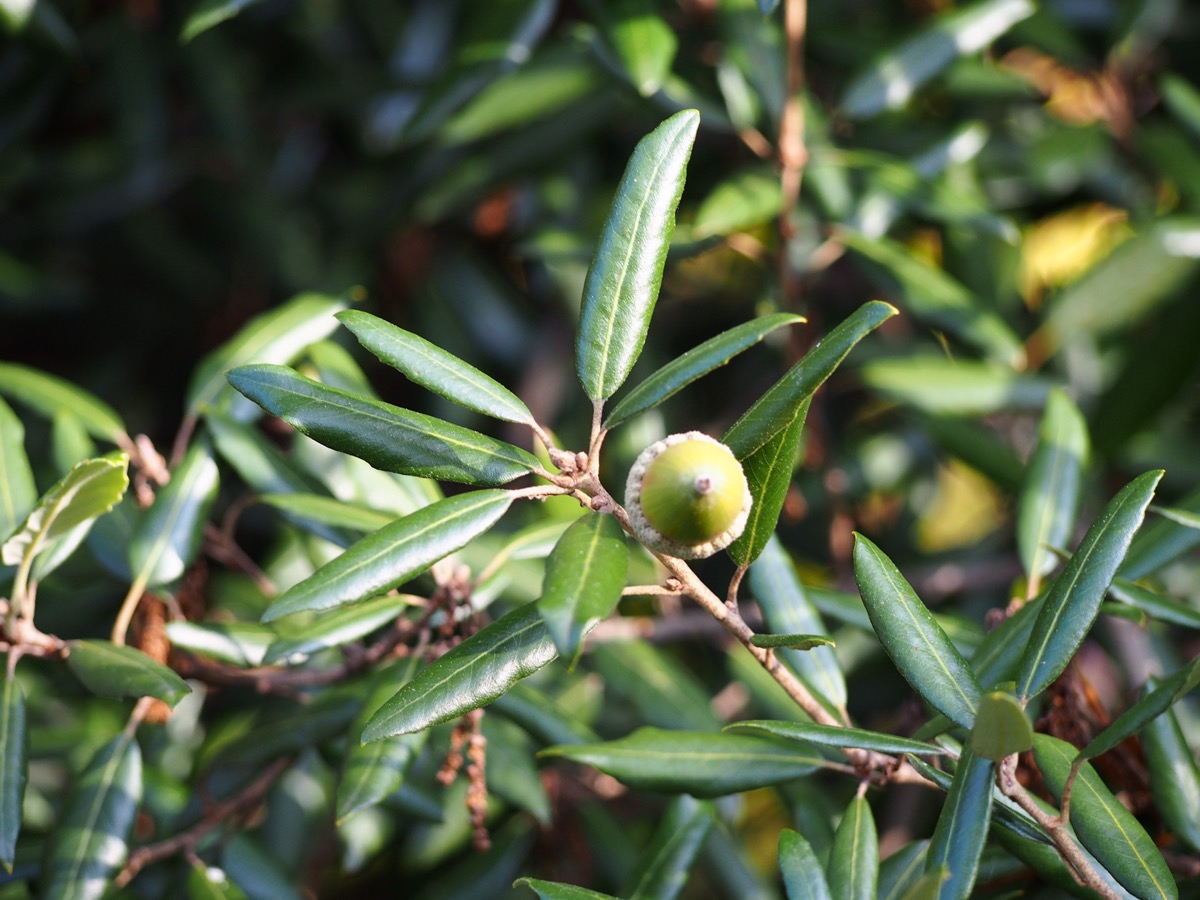
Mature holm oak — Quercus ilex

Quercus ilex is the climax species of this limestone hillside — the tree this land has been trying to grow for thousands of years. Deep taproot through karst. Leathery leaves that resist drought and fire. Soil carbon the pine never built. It does not need managing. It needs planting.

🔥 Fire risk Low
🌱 Native to limestone Yes — climax species
🌿 Root depth Deep
💨 Carbon storage High — wood + soil
🍄 Soil biodiversity Rich mycorrhizal network
Underground

Where the difference really is.

Aleppo pine roots stay in the topsoil — shallow, lateral, gone at 40 cm. They hold the surface but do nothing below it. Holm oak drives a single taproot straight through the subsoil and into the limestone, following cracks to water three metres down. That root is what builds drought resilience, carbon depth, and soil structure that outlasts the tree itself.

Root cross-section — Aleppo pine shallow lateral roots vs holm oak deep taproot through limestone TOPSOIL SUBSOIL LIMESTONE ALEPPO PINE ~40 cm HOLM OAK 3+ m Aleppo pine — shallow lateral roots, topsoil only (~40 cm) Holm oak — deep taproot through limestone (3+ m) TOPSOIL SUBSOIL LIMESTONE ALEPPO PINE Shallow HOLM OAK Deep topsoil subsoil limestone
Carbon sequestration

The accumulation, year by year.

These are projections, not confirmed figures. The carbon market pathway is real but not yet open — eligibility, methodology, and registration depend on outcomes we do not yet know. We are building the documentation now so the option exists when it does.

2026
Baseline
2027
~4–8 t
2028
~8–16 t
2029
~12–22 t
2030+
~16–22 t+

Cumulative CO₂ removal potential, 4.5 ha combined citrus + holm oak. Range based on 1–5 t/ha/yr sequestration potential as the system matures. Actual performance depends on growth rate and soil response. Soil carbon baseline to be measured autumn 2026 via IVIA-accredited laboratory.

Frameworks we are monitoring
Verra VCS VM0042 — under review Agreena — exploring EU CRCF — expected ~2028 IVIA Lab — baseline planned Ma Earth — not yet applied
The Records

What we're measuring, and when.

🌍
Soil carbon

One composite sample per parcel, root zone (0–30 cm). IVIA-accredited laboratory, Valencia. Re-measured every two years to document improvement vs baseline.

Baseline: Autumn 2026
🌳
Forest biomass

Holm oak growth tracked from first planting. Survival rate, height, and canopy coverage measured annually.

From first planting, 2026
📓
Organic matter

Inputs, treatments, and soil observations logged in the cuaderno de campo from day one of CAECV registration. Every entry timestamped and parcel-referenced.

From September 2026
🦎
Biodiversity baseline

Flora, fauna, and invertebrate survey of the 1.7 ha section before and after pine removal. Documents recovery of native species as holm oak establishes.

Year 4 — 2029

Support the transition.

Year 1 funds the first plantings, the soil baseline, and the field records that make everything else possible.

→ First holm oak plantings — 1.7 ha section, first batch of Quercus ilex saplings in the ground
→ Soil carbon baseline — IVIA-accredited laboratory, one composite sample per parcel
→ DANA storm cleanup — document and clear damage on the lower terraces
→ Field documentation — cuaderno de campo from day one, published as it happens
Donate Adopt a tree

Follow the restoration as it happens — subscribe to the podcast